Blog · AI

Shadow AI: Closing the Visibility Gap with F5’s New Utility
See how F5's AI Security Platform delivers shadow AI detection, AI governance, and runtime protection to close the visibility gap.
Introduction: Securing Shadow AI with F5’s Newest AI Governance Platform
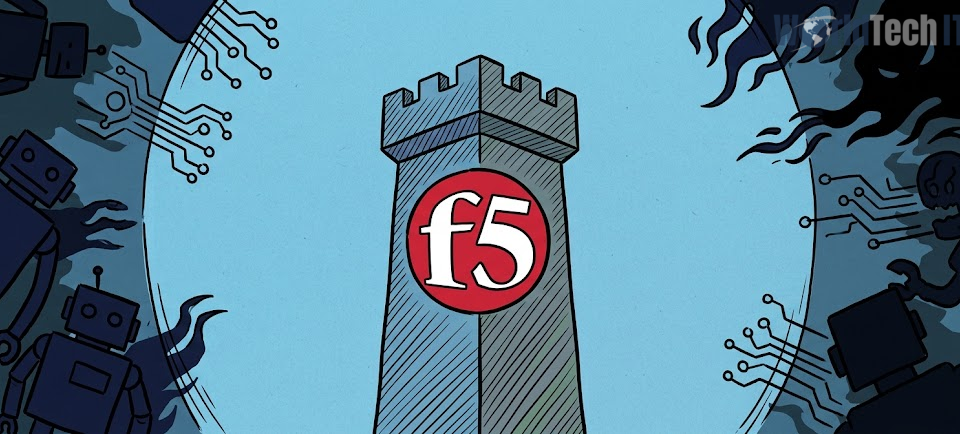
Whether you’re an engineer or a CISO, this one’s for you. Maybe you’ve been quietly side-eyeing the ChatGPT tabs popping up across your org. Maybe you just realized half your workforce is feeding company data to models you’ve never heard of. Either way, F5 just released the F5 AI Security Platform, built on its acquisition of SurePath AI. The goal is continuous AI visibility, AI governance, and AI threat detection, aimed squarely at exposing the shadow AI economy hiding inside your enterprise. So why is this a big deal, who actually wins, and what happens to the teams who decide a problem they can’t see isn’t a problem at all?
Here’s the thing: shadow AI doesn’t care what sector you’re in. If undisclosed AI usage is quietly reaching your private servers, your back-end, and your most sensitive data, right under the nose of your own enterprise, that’s a problem, and a big one. F5 isn’t trying to rip AI out by the roots. AI is too useful for that, and they know it. The play is protection: keep the productivity, close the safety gap.
Shadow AI: What Is It and How Is It Different From Shadow IT?

So what is shadow AI? It’s any AI tool used inside a company that hasn’t been approved, or that’s running without a security measure like F5’s guardrails sitting in front of it. Increasingly, that “tool” isn’t a chatbot. It’s an autonomous agent making its own calls, which is exactly why agentic AI security, AI agent security, and MCP security have each become their own headache. This isn’t just an IT or engineering problem. It’s already a company-wide enterprise liability that stretches across every corner of the business.
Why does that keep security teams up at night? Because the threat comes from inside the house. Picture one of your own people pasting a sensitive GitHub repo straight into a public LLM chat, handing source code to a model you don’t control. That’s how data leaks, and how the LLM security failures mapped in the OWASP Top 10 start. It hands attackers an access point you never knew existed, a window opened from the inside.
Shadow IT isn’t new, and it isn’t inherently malicious. It’s simpler than that: shadow IT is any software, hardware, or information resource that hasn’t been approved. Think of a group of employees spinning up a secret Google Drive, or someone dropping shadow data into a file-sharing app nobody signed off on. That kind of thing used to be hard to detect. It’s less so now, with more discovery tools available, most notably F5’s acquisition of SurePath AI.
So beyond the definitions: what actually happens when shadow AI is left alone?
A New Threat, New Worries
How bad it gets depends on what the shadow AI is touching. Here’s a quick lay of the land: shadow AI risks, sorted by how hard they hit your enterprise.
| Low Impact | Medium Impact | High Impact |
|---|---|---|
| Policy drift and reduced visibility that leads to compliance gaps | Data leakage and IP exposure, sometimes accidental | Credential and API exposure that hands attackers a new route in |
Low-impact issues are the slow leak: you lose AI visibility, drift out of compliance, and nobody notices until an auditor does. Climb a rung, and you’re leaking data and intellectual property. Climb again, and you’ve handed someone a fresh front door into your environment, credentials, and API access you didn’t know were unlocked. That’s the rung you never want to reach. F5’s 2026 SOAS Report found that 98% of organizations are preparing for agentic AI, but the speed of agent adoption is outpacing the controls designed to manage it.
F5 AI Security: Where SurePath Helps
So where does F5 come in? This addition to the AI governance platform boils down to one word: discovery. AI discovery, to be exact. This is real shadow AI detection. F5 can see shadow AI usage out in the open and act on it at runtime, which is where AI runtime protection comes in. And it doesn’t require a heavy installation process for your IT team.
Here’s what it does:
It spots unauthorized tools and services. With SurePath sitting in the middle of your traffic, like a traffic cop watching every car go by, the moment a device starts talking to an unauthorized AI service, you’ve got eyes on it.
It classifies AI use by utility and intent. Knowing AI is being used isn’t enough; you need to know what for. SurePath reads the intent, so whether the tool is approved or not, it can flag when usage drifts toward AI data leakage territory. It’s the same instinct behind F5’s bot and automated threat detection: watch the behavior, not just the identity.
It builds a paper trail. Say a “harmless” shadow AI tool starts getting fed records, internal code, or worse. This is where the platform taps IT on the shoulder and flags the risk building up.
It provides AI observability in the form of a complete audit trail across every AI interaction, maintaining the accountability and traceability regulated industries require.
Put together, F5 offers a combined AI security capability across a range of deployments without a lengthy install process. By closing the visibility gap, the platform gives your enterprise a way to limit the blast radius of shadow AI usage before it turns into something worse.
What About Existing Infrastructure?
That’s fine, Austin, but how does this affect what I’m already running on F5?
SurePath AI isn’t a mandated layer forcing every F5 customer to upgrade to something they don’t need. It’s an extension of what F5 already offers, one that bolts on cleanly, slotting into your enterprise AI security stack and broader enterprise AI governance program without a redesign. It layers over your existing web app and API protection rather than replacing it. Adopting the platform doesn’t require any change to your existing architecture.
No rip and replace. Just the new capability, sitting alongside what you’ve already got.
Conclusion
AI adoption keeps climbing across the enterprise every quarter, so it’s better late than never to get ahead of the shadow AI risks. Left unchecked, that shadow can swallow your data whole while your IT team has no idea it’s even there. You don’t need an AI red team or a six-month enterprise AI security project to start. You need to know how to detect shadow AI in the first place. You can’t protect what you can’t see, and that’s the whole case for AI observability. F5’s play here is to finally let you see it.
If you want a hand mapping shadow AI in your own environment before it climbs that ladder, our team is glad to talk it through. Reach out, and we’ll help you figure out where to start.